All Categories
Featured
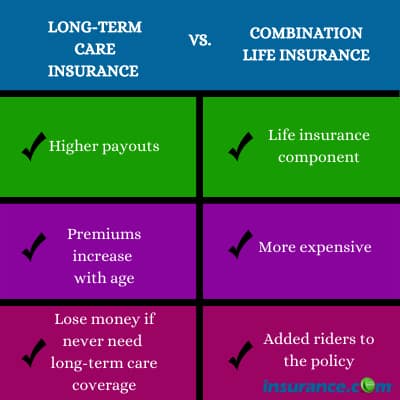
Table of Contents
Does Medicare cover long-term care? Generally, the answer is no. Initial Medicare does not spend for custodial care, which is assistance with everyday activities like bathing, dressing, or utilizing the bathroom. A lot of individuals who need long-lasting care require non-medical help. While Medicare Part A and Medicare Part B are crucial for hospital stays and medical professional check outs, they are not created for long-lasting stays in a nursing home or assisted living facility.

In spite of our attempts to make this website accessible for everyone, there may still be some pages or areas that are not entirely accessible, remain in the procedure of becoming available, or do not have an ideal technological service to make them accessible. However, we are always making every effort to enhance our accessibility by including, upgrading, improving its options and features, and including new technologies.
If you wish to call this site's owner, please use the contact form on the site. - With this tool, users can modify font size, style, letter spacing, and line height for improved positioning and readability. - Users can tailor their color contrast profiles to light, dark, desaturated, and monochrome.
- Users can enable focus mode to highlight the existing page info based upon their mouse motion.
Among the most common and costly misunderstandings in retirement planning is the assumption that Medicare will pay for long-lasting care. It will not, a minimum of not in the method most families expect. Here is the sincere split. Medicare is a federal medical insurance program for individuals age 65 and older, and for certain younger people with specials needs.
Protecting Your Savings With Accident Coverage
Short-term experienced care after a qualifying healthcare facility stay of a minimum of three days. Coverage runs up to 100 days per advantage period, with days 120 completely paid and days 21100 based on a substantial everyday copay. Minimal home health for medically required experienced care. Hospice care. Medicare was not developed to pay for the continuous custodial care that most long-lasting care claims include.
Whether the care is provided in the house, in an assisted living neighborhood, in memory care, or in a knowledgeable nursing facility, Medicare will not money it once the short-term skilled window closes. 2 words carry a lot of weight in this area: and. care is what a licensed clinician supplies: injury care, IV treatment, physical rehabilitation.
Retirement Planning San Bernardino
care is the ongoing aid with daily living that many long-term care actually is. Medicare does not cover this. When the short-term knowledgeable window closes and care continues, the costs shifts entirely to the family (or, sometimes, Medicaid after possessions have been invested down). Long-Term Care Insurance coverage was created particularly for this custodial care.
Many agreements likewise include care coordination services that help a household navigate suppliers and paperwork. Long-Term Care Insurance coverage covers the daily-living side once the medical piece is done.
Using Life Insurance for Retirement Income
Partnership-qualified Long-Term Care policies, readily available in the majority of states, offer additional Medicaid property security if benefits are ever exhausted. If your retirement plan presumes Medicare will deal with a long-lasting care event, it does not.
Presuming Medicare will get the job done is the strategy that fails. Ready to talk it through? A brief conversation is the fastest method to see whether the ideas here fit your situation. Keep checking out U.S. Department of Health and Human Being Solutions, (care stats and meanings). Genworth Cost of Care Study (yearly industry expense standard).
National Association of Insurance Commissioners, A Consumer's Guide to Long-Term Care Insurance. Illustrative pricing in this article is for education only and does not represent a quote for any particular individual or policy.
Have you considered how you would desire to get care if you can't care for yourself in the future? Have you prepared to pay for it?
Comparing LTC Coverage Versus Medicare
Comprehending the difference in between Short-term Care insurance coverage vs. Long-term Care insurance coverage can help you develop a care strategy that makes sure your finances are well safeguarded. Long-lasting Care insurance coverage helps cover the support that you'll need when you can no longer carry out tasks on your own from persistent illness, disability, and/or disability.

Latest Posts
How to Analyze Medicare and LTC

Choosing Between Fixed Annuities for Retirement

Future Retirement Health Financial Tips